


PREVENTIVE DENTISTRY
Exam & X-Rays
A comprehensive look at your teeth, gums and supporting structures so problems can be identified early and treatment planned clearly.
Most dental problems begin quietly. A regular exam is the chance to look closely at the teeth, gums and supporting bone — and to talk through what we find in plain language, well before anything becomes urgent.
a smile made for you.
PREVENTIVE DENTISTRY
Exam & X-Rays at Valencia Dental Office
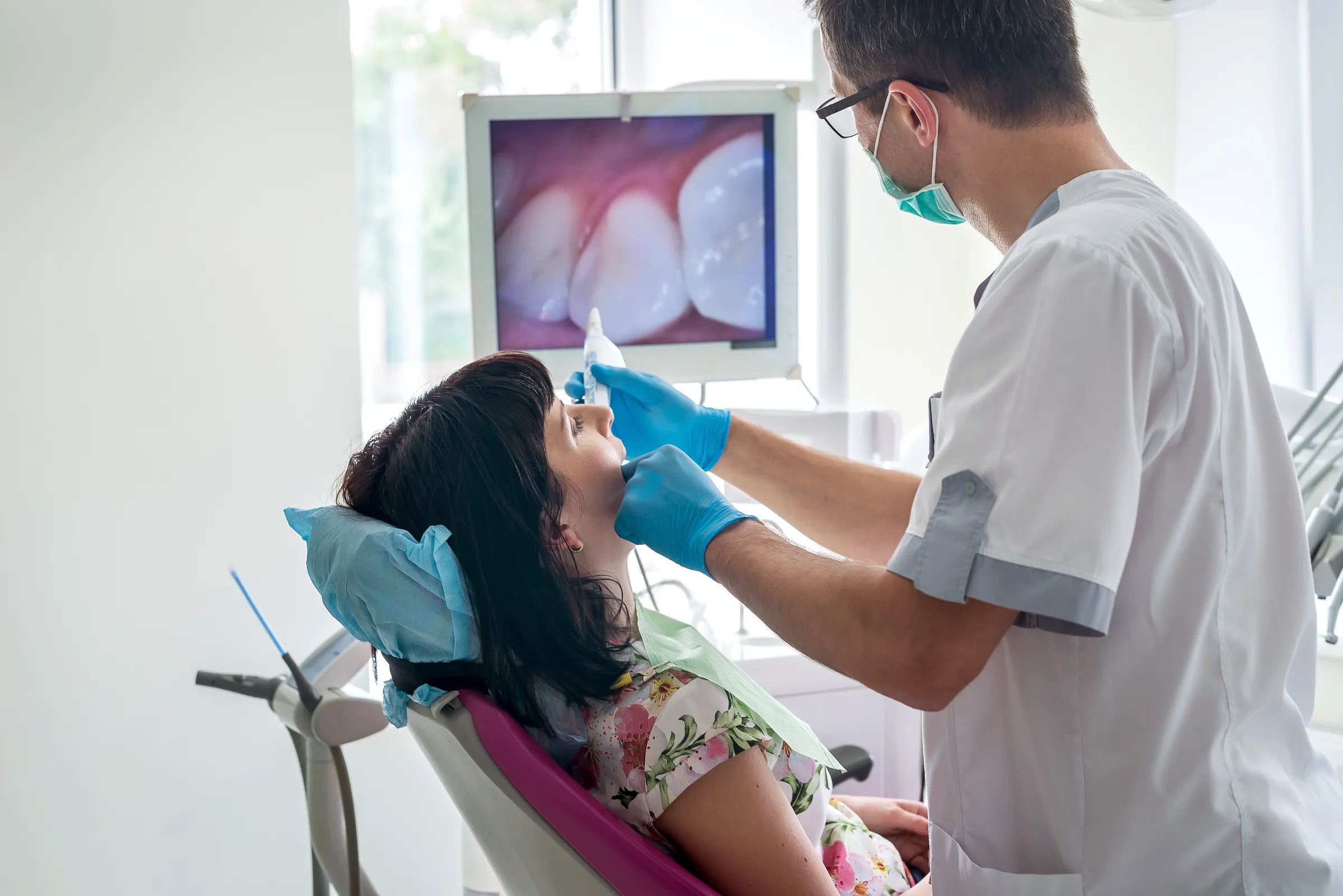
Regular dental examinations combine a clinical evaluation with diagnostic images when appropriate. Together, they help identify cavities, gum disease, failing dental work, infections, bite changes and other conditions that may not be obvious from symptoms alone.
Every appointment also compares where your mouth is today against where it was at the last visit. That record — what has changed, what has stayed stable — is what makes early, conservative treatment possible.

WHAT’S INCLUDED
A Thorough Look, Every Visit
- Early identificationThe examination is built around finding small changes while they are still simple to address.
- Care that complements home hygieneWhat happens in the chair works alongside what you do daily, rather than standing in for it.
- Intervals set by your own riskHow often you come back is based on your history and oral health, not a fixed schedule applied to everyone.
- Time to ask questionsFindings are explained as they come up, so nothing on your chart is a surprise at the end.
THE VISIT
How Your Exam Works
- Health reviewWe start with your dental and medical history, including anything that has changed since we last saw you.
- Clinical examinationThe teeth, gums, bite and soft tissues are examined directly, along with any existing dental work.
- Images where indicatedX-rays are selected for your age, history, symptoms and risk rather than taken the same way for everyone.
- Findings and planWe walk through what we saw, what is worth watching, and what — if anything — needs attention now.
DIAGNOSTIC IMAGES
Types of Dental X-Rays
Different views answer different questions, which is why only the images useful for your situation are taken.
Bitewing
Shows the crowns of the upper and lower back teeth in a single view, including the surfaces between teeth that are hidden from direct sight.
Periapical
Captures one tooth from the crown to the root tip, with the surrounding bone, when a specific tooth needs a closer look.
Panoramic
A single wide image of both jaws, the sinuses and the joints, used when a broad overview is more useful than fine detail.
IS THIS RIGHT FOR YOU?
When to Schedule a Visit
Everyone benefits from periodic dental evaluation, but the frequency of exams and radiographs should be individualized. Patients with active disease or higher risk may need closer monitoring.
- It has been longer than you intended since the last visit
- Something feels different — sensitivity, bleeding gums, a rough edge
- You have crowns, fillings or implants that should be monitored over time
- Your medical history or medications have changed

BETWEEN VISITS
What You Do at Home Matters Most
Brushing and cleaning between the teeth every day does more for your long-term oral health than anything that happens in the chair. The exam is there for what daily care cannot reach and cannot see.
If something changes between appointments — a new sensitivity, a chipped edge, gums that bleed when they did not before — it is worth a call rather than waiting for the next scheduled visit.
Exam & X-Rays FAQ
- What does exam & x-rays involve?
- Regular dental examinations combine a clinical evaluation with diagnostic images when appropriate. Together, they help identify cavities, gum disease, failing dental work, infections, bite changes and other conditions that may not be obvious from symptoms alone.
- How do I know whether this treatment is appropriate for me?
- Everyone benefits from periodic dental evaluation, but the frequency of exams and radiographs should be individualized. Patients with active disease or higher risk may need closer monitoring.
- What should I expect from the treatment process?
- Your visit includes a review of your dental and medical history followed by an examination of the teeth and soft tissues. X-rays are selected based on your age, history, symptoms and risk rather than taken automatically in the same way for every patient.
- How often should I have an exam?
- Many people are seen twice a year, but the right interval depends on your own history and oral health. We will suggest a schedule and revisit it as things change.
- Do I need X-rays at every visit?
- No. Radiographs are selected based on your age, history, symptoms and risk, so the interval is not the same for everyone, or the same at every appointment.
- I have concerns about X-rays. Can we talk about it?
- Please do raise it. Modern digital sensors use less radiation than older film, and images are only taken when they will genuinely inform your care. We are happy to explain what we are looking for before anything is taken.
- What happens if you find something?
- We show you what we are seeing, explain the options and the trade-offs, and give you time to decide. Nothing is scheduled without talking it through.
- Can I bring records from another office?
- Yes, and they are genuinely useful — previous X-rays and treatment notes give us something to compare against. Ask your previous office to send them ahead of your visit.