



COSMETIC DENTISTRY
Veneers
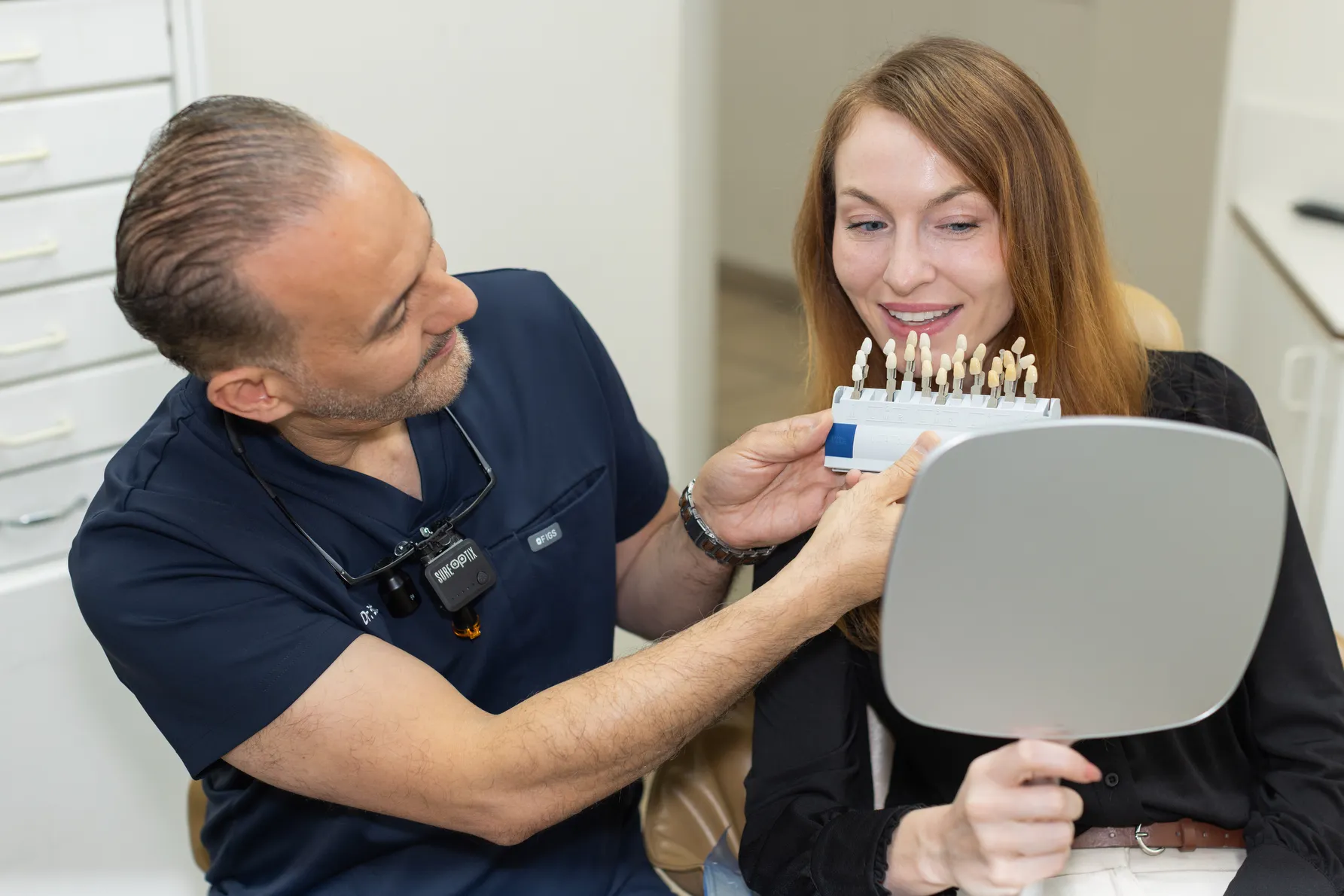
Refine the colour, shape and symmetry of your smile with veneers designed around your individual features.
Because more than one veneer material exists, the right choice comes down to your goals, timeline and how much change you are hoping to see — not a single default approach.
a smile made for you.
COSMETIC DENTISTRY
Veneers at Valencia Dental Office
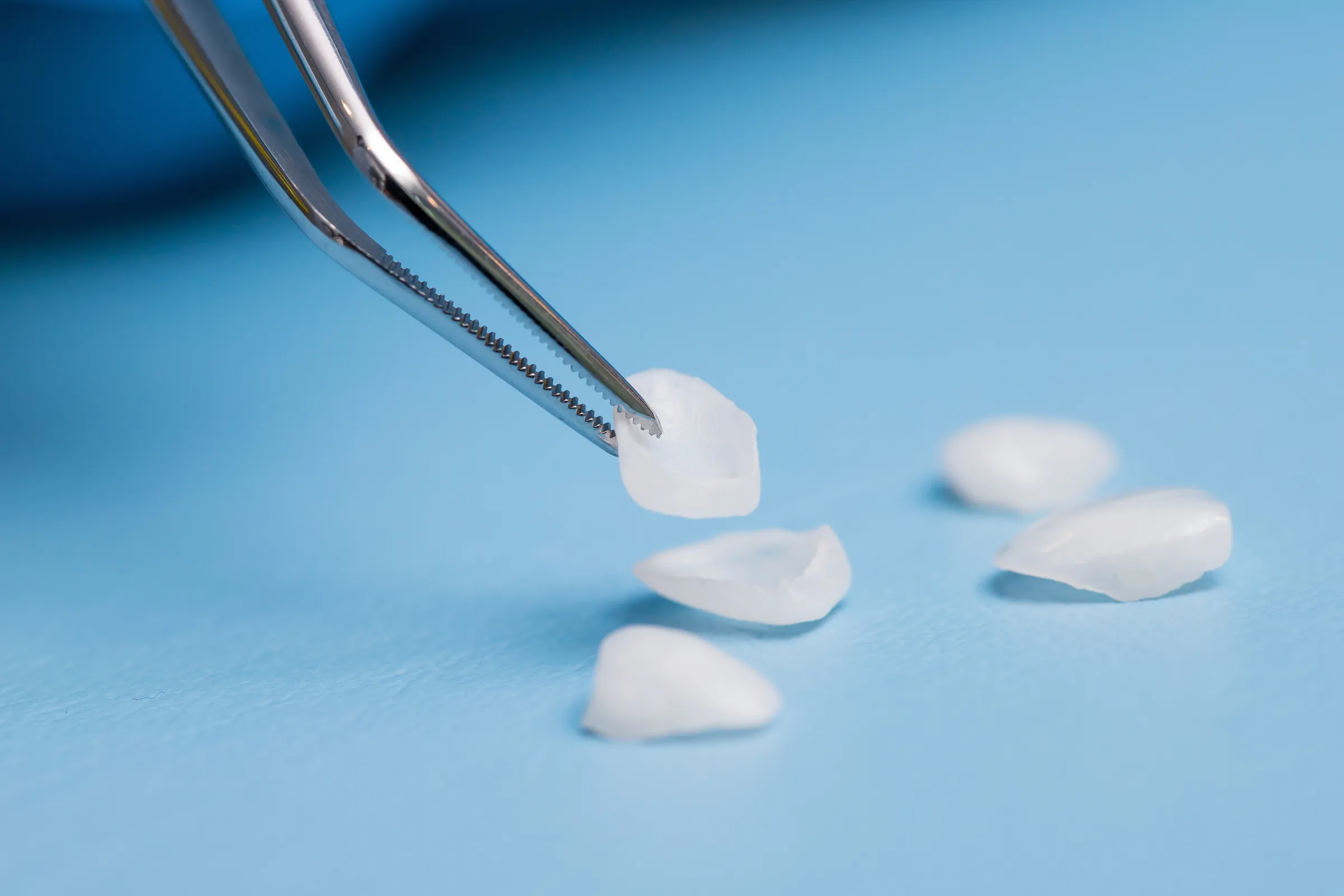
Veneers are thin restorations placed over the visible surface of selected teeth to improve cosmetic concerns such as chips, uneven shapes, small spaces, discoloration or worn edges. The material and preparation approach depend on the tooth, the desired change and your long-term needs.
Your dentist will walk through what each material can and cannot do for your specific teeth before recommending one.

MATERIAL OPTIONS
Porcelain or Composite — What Differs
- Porcelain veneersLab-fabricated restorations known for natural light behavior and stain resistance, typically requiring more than one visit.
- Composite veneersSculpted directly on the tooth in a single visit, offering a faster, more conservative option for some cases.
- Longevity considerationsEach material has different wear characteristics over time, which factors into which one makes sense for you.
- ReversibilityComposite is generally easier to adjust or remove later; porcelain is usually considered a longer-term commitment.
CHOOSING YOUR MATERIAL
How We Help You Decide
- Discussing your goalsHow much change you want, and how quickly, both influence which material fits best.
- Evaluating your teethExisting shape, shade and enamel condition affect which materials are realistic options.
- Reviewing trade-offsWe walk through cost, timeline, durability and reversibility side by side.
- Finalizing the planOnce a material is chosen, treatment is planned and sequenced accordingly.
A CLOSER LOOK
What Each Veneer Type Involves
Here is a general sense of what each option involves, though your dentist will confirm what applies to your specific teeth.
Porcelain veneers
Digital scans or impressions are used to fabricate each veneer, which is bonded once fit and shade are confirmed.
Composite veneers
Resin is layered and shaped directly on the tooth and hardened with a curing light in the same visit.
Combination approaches
Some patients use porcelain on more visible teeth and composite elsewhere, depending on the goal.
IS THIS RIGHT FOR YOU?
When to Schedule a Visit
Veneers are not the best option for every cosmetic concern. Significant decay, active gum disease, heavy grinding or major alignment problems may need to be treated first or may point to another approach.
- You are comparing veneer materials and want an individualized recommendation
- You want a faster, single-visit option to consider alongside porcelain
- A previous veneer, of either material, needs to be evaluated or replaced
- You are unsure whether your enamel and bite are suited to veneers
PROTECTING YOUR INVESTMENT
Long-Term Care, Whichever Material You Choose
Both porcelain and composite veneers benefit from the same daily care as natural teeth, along with routine checkups to catch small issues early.
Grinding, clenching or using teeth as tools can shorten the life of either material, so your dentist may discuss habits worth protecting against.
Veneers FAQ
- What does veneers involve?
- Veneers are thin restorations placed over the visible surface of selected teeth to improve cosmetic concerns such as chips, uneven shapes, small spaces, discoloration or worn edges. The material and preparation approach depend on the tooth, the desired change and your long-term needs.
- How do I know whether this treatment is appropriate for me?
- Veneers are not the best option for every cosmetic concern. Significant decay, active gum disease, heavy grinding or major alignment problems may need to be treated first or may point to another approach.
- What should I expect from the treatment process?
- We evaluate your teeth, gums, bite and cosmetic goals before recommending veneers. Planning may include photographs, digital scans and a discussion of shade and shape. The final veneers are evaluated carefully before placement.
- Which material lasts longer, porcelain or composite?
- Porcelain is generally more resistant to wear and staining over time, while composite is more easily repaired or adjusted; the right choice depends on your priorities.
- Can I switch from composite to porcelain later?
- In many cases, yes — composite veneers can serve as a starting point before a patient transitions to porcelain, though this depends on the individual case.
- How many teeth typically receive veneers?
- This depends entirely on your goals — from a single tooth to a full arch of visible teeth.
- Do veneers require any special maintenance?
- They are cared for like natural teeth, with regular brushing, flossing and checkups to monitor the material over time.
- Is a consultation required before choosing a material?
- Yes, an evaluation of your teeth, bite and goals is the starting point for recommending one material over another.